Familienaufstellung im feuchtwarmen Klima - von Würgefeigen und Lederbälgern
Family Constellation in a Humid Climate: of Strangler Figs and Leather Bellows
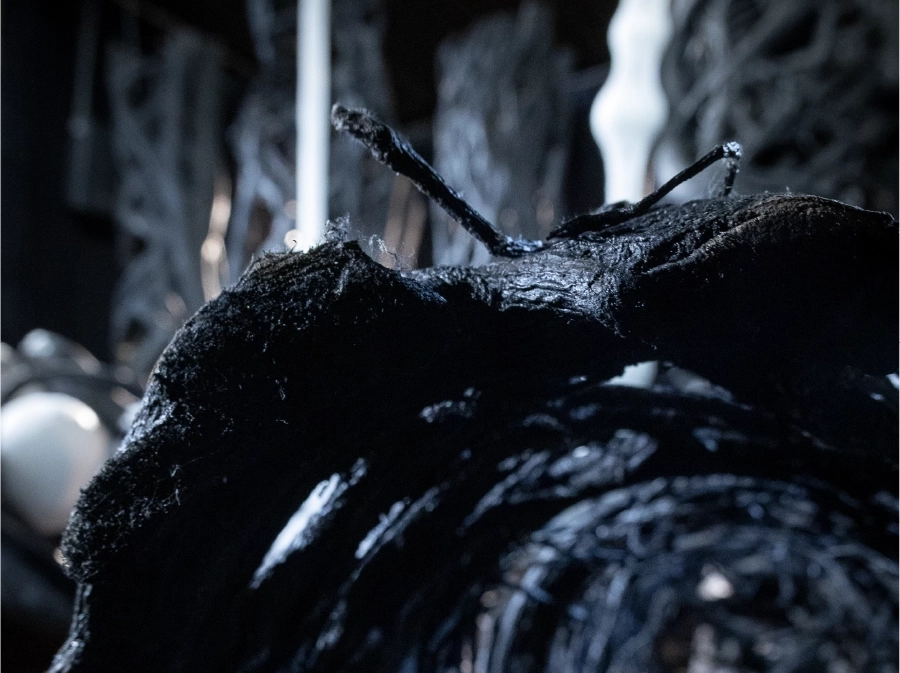
Der Baum ist tot und gänzlich zerfallen, aber die Bedeutung des Abwesenden ist gewichtig. In der Familienaufstellung nach Hellinger sind die toten Mitglieder einer Familie gleichbedeutend wie die Lebenden und werden in der Aufstellung genauso bewertet.
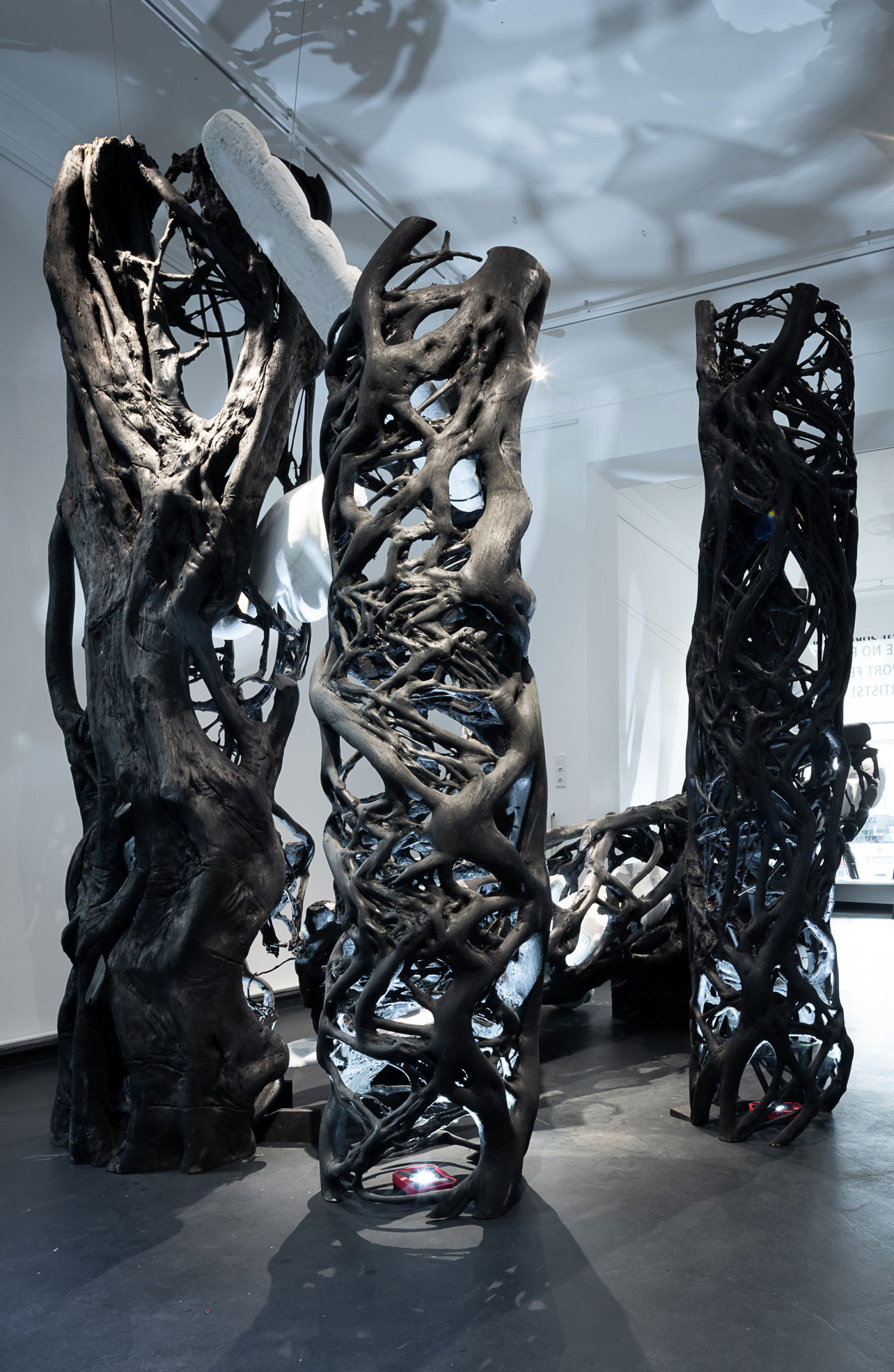
Nehmen wir die Familie als kleinste soziale Zelle unseres Kulturkreises und vergleichen sie mit einer Lebensgemeinschaft von Baumriese und Würgefeige mit all ihren Mitbewohnern und Kleinstlebewesen, so entsteht auch hier im Werden und Vergehen ein harmonisches Bild. Im Lebenskreislauf des asiatischen Djungels werden Baumriesen von Schmarotzern umwoben und nach Jahrzehnten getötet. Vögel bringen die Samen der Würgefeige in Astgabeln unter und von dort wachsen die Luftwurzeln hinunter Richtung Boden, wo sie sich nach Ankunft festkrallen um weiter ins Erdreich einzudringen. Die Wachstumszonen dieser Tentakeln knallrot, energiegeladen, weisen sie auf hohe Zellteilung hin. Im Boden ersteinmal verankert umschlingt die Feige in netzartiger Struktur ihren Wirt und baut eine bis in die Krone reichende Statik aus Nährstoffen des Baumriesen auf. Ein echter Schmarotzer der nach Jahrzhnten, vielleicht Jahrhunderten erst den Baum zum Erliegen bringt und dann selber fällt. Der Humus des abgestorbenen Baumes ist entscheidende Lebensgrundlage für Kleinstlebewesen und neue Strukturen aus Flora und Fauna.
The tree is dead and entirely deca yed, yet the significance of the absent is weighty. In Hellinger’s „Family Constellation,“ the deceased members of a family are as significant as the living and are accorded equal status within the systemic arrangement.
If we take the family as the smallest social unit of our culture and compare it to the symbiotic community of a giant tree and a strangler fig—along with all their cohabitants and microorganisms — a harmonious image of growth and decay emerges here as well. In the life cycle of the Asian jungle, giant trees are shrouded by parasites and, after decades, killed. Birds deposit the seeds of the strangler fig int o the Forks of branches; from there, aerial roots grow downwards toward the floor, where, upon arrival, they take hold and penetrate deep into the earth. The growth zones of these tentacles are a vivid red, brimming with energy — a sign of rapid cell division. Once anchored in the soil, the fig envelops its host in a net-like structure, building a physical stability that reaches up into the canopy, fueled by the nutrients of the giant tree. A true parasite that, after decades or perhaps centuries, finally brings the tree to its knees, only to eventually fall itself. The humus of the dead tree then becomes the vital foundation for microorganisms and new structures of flora and fauna.
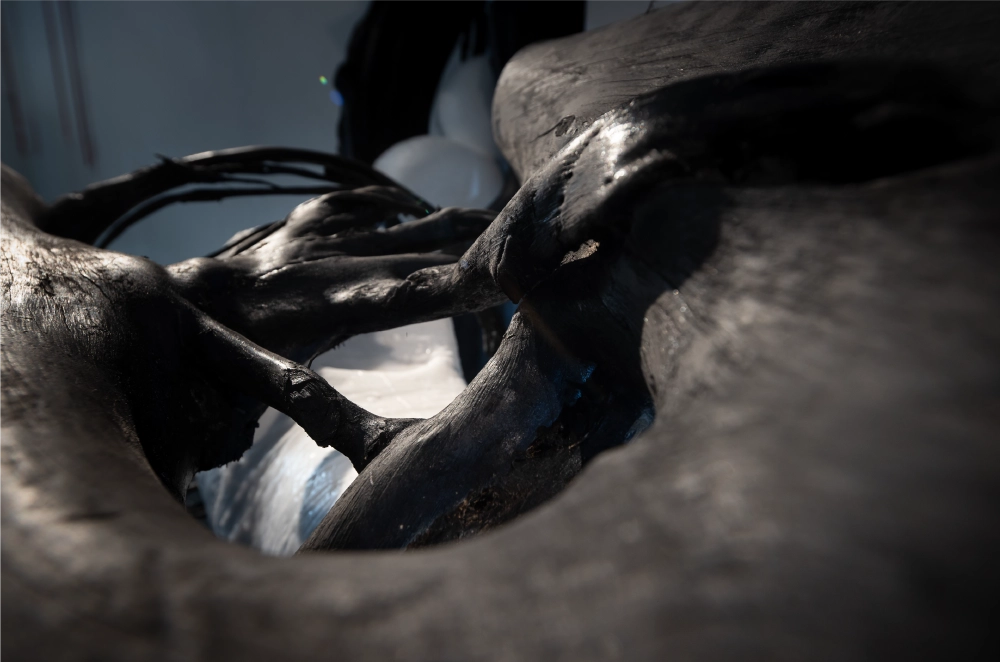
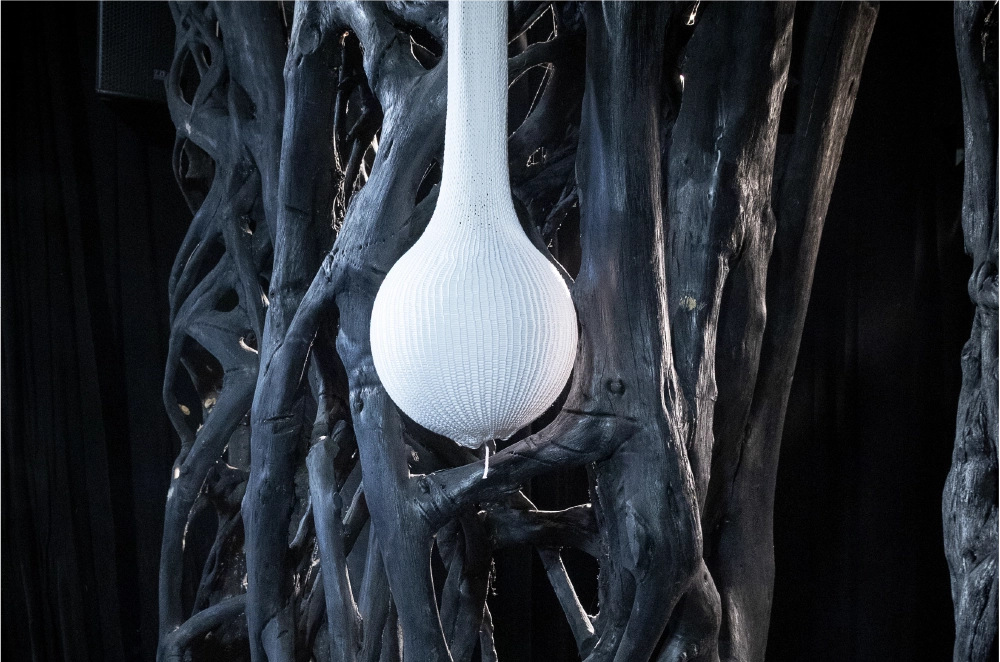
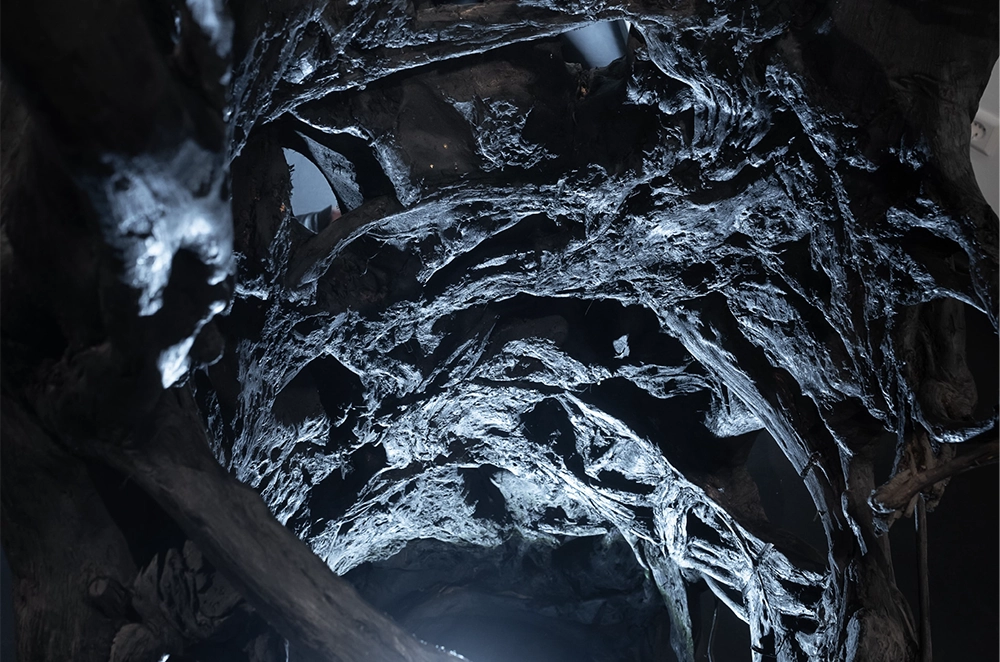

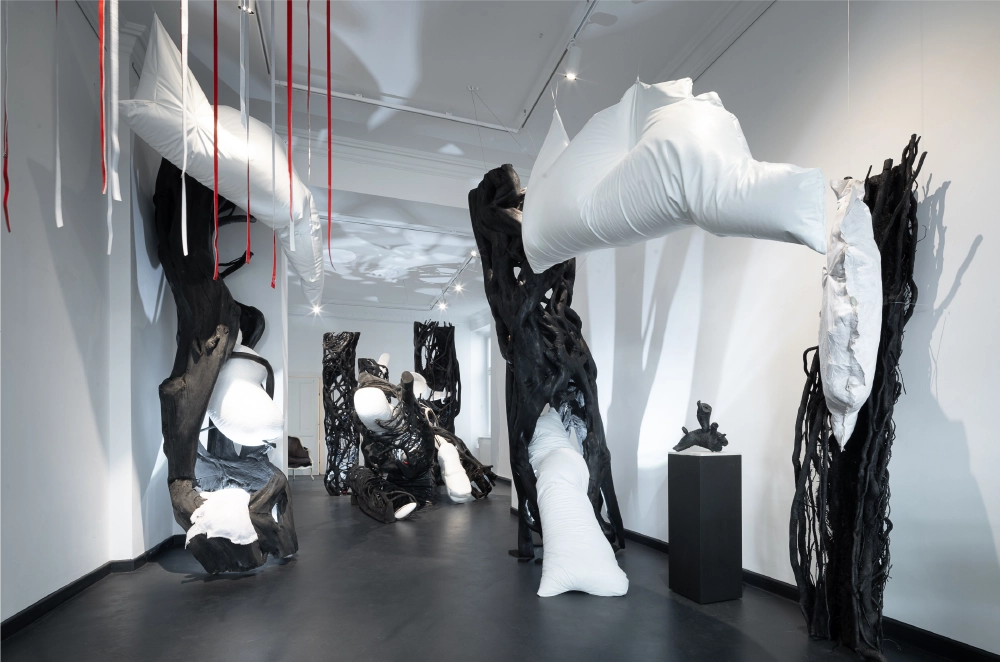
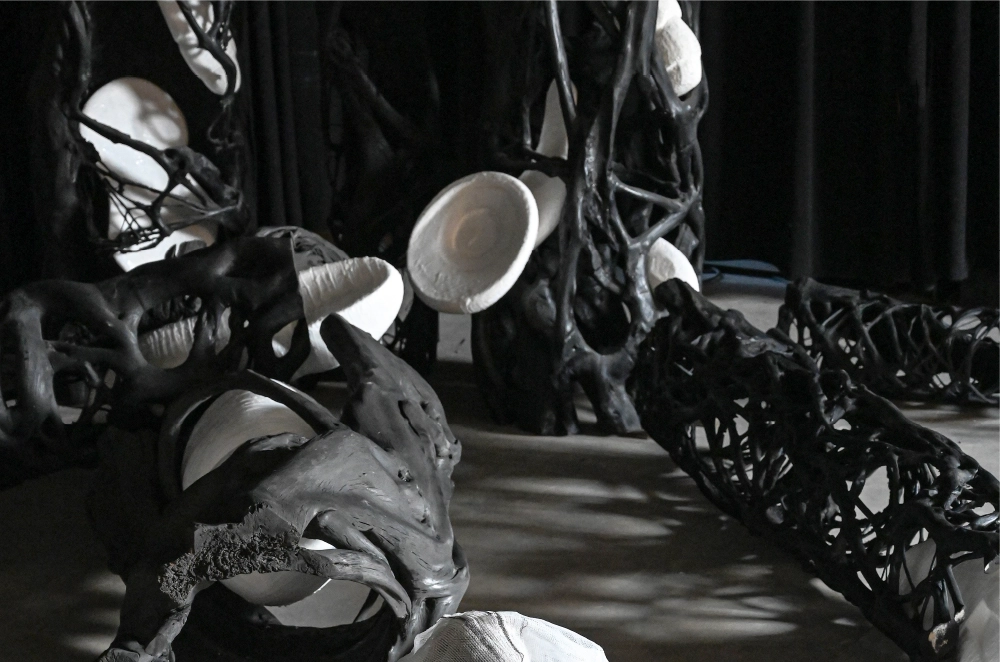
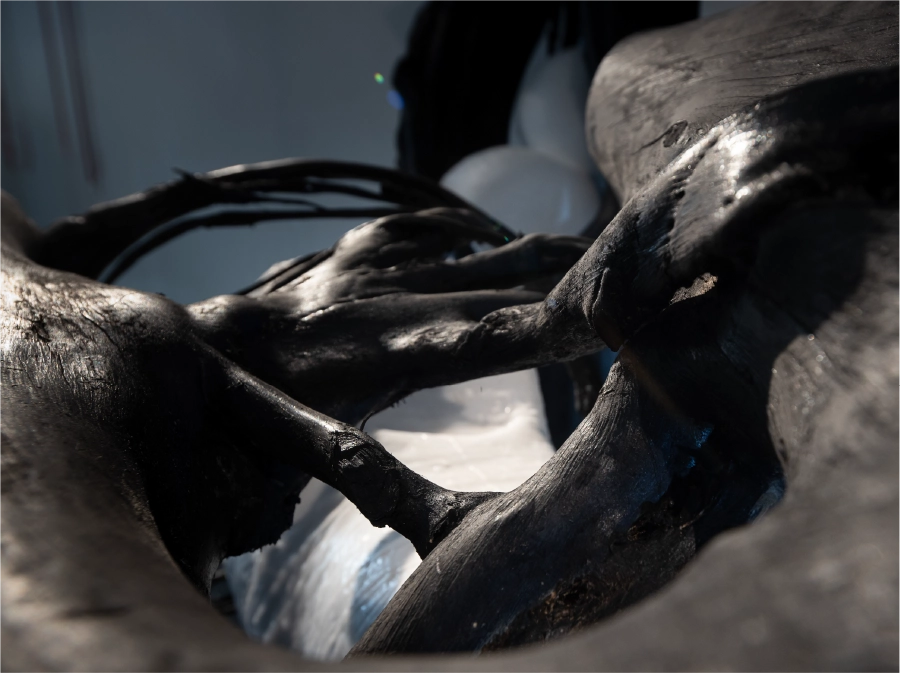
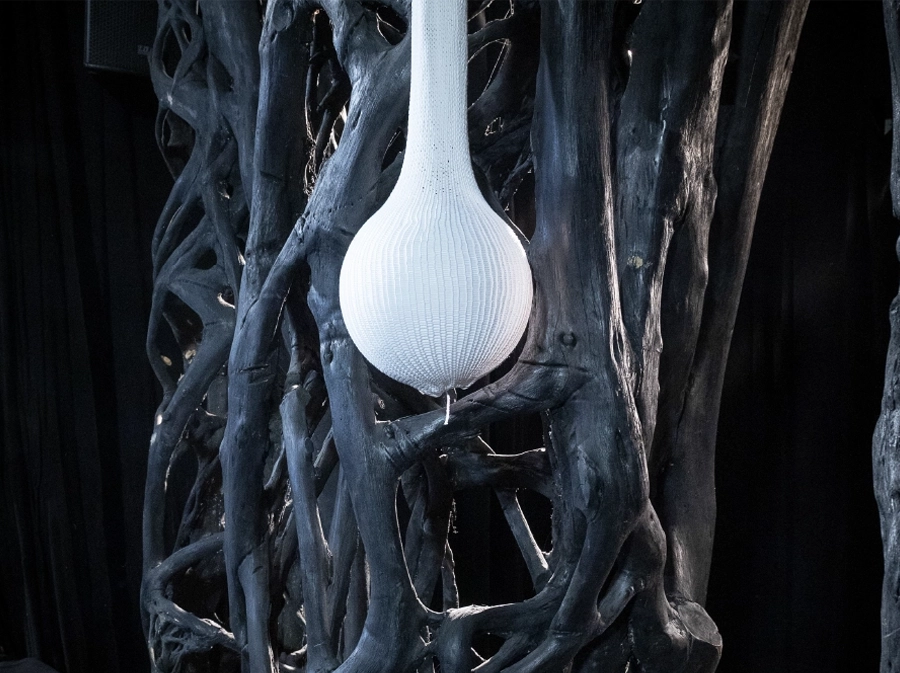
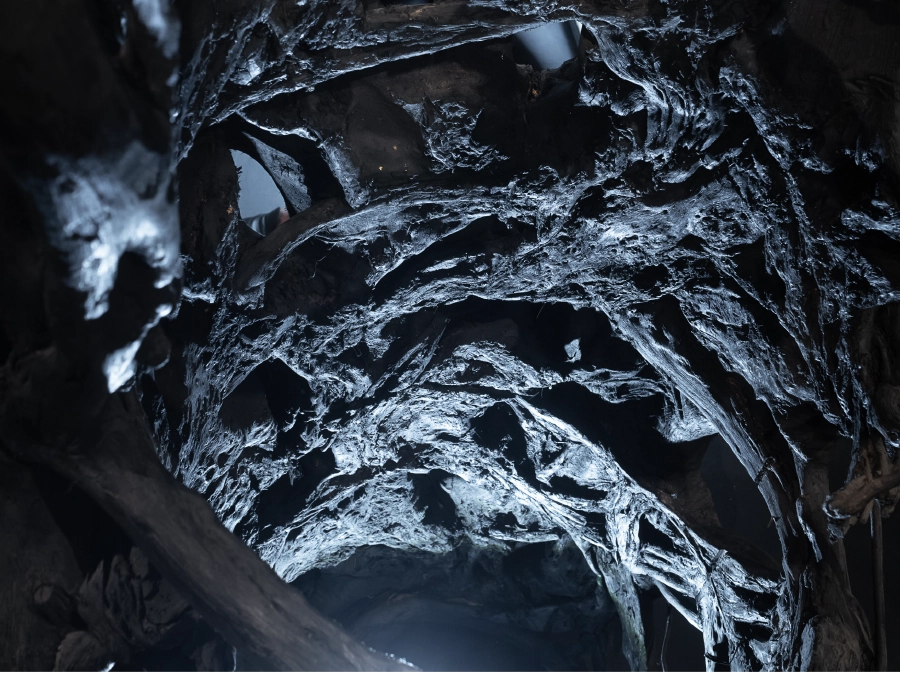
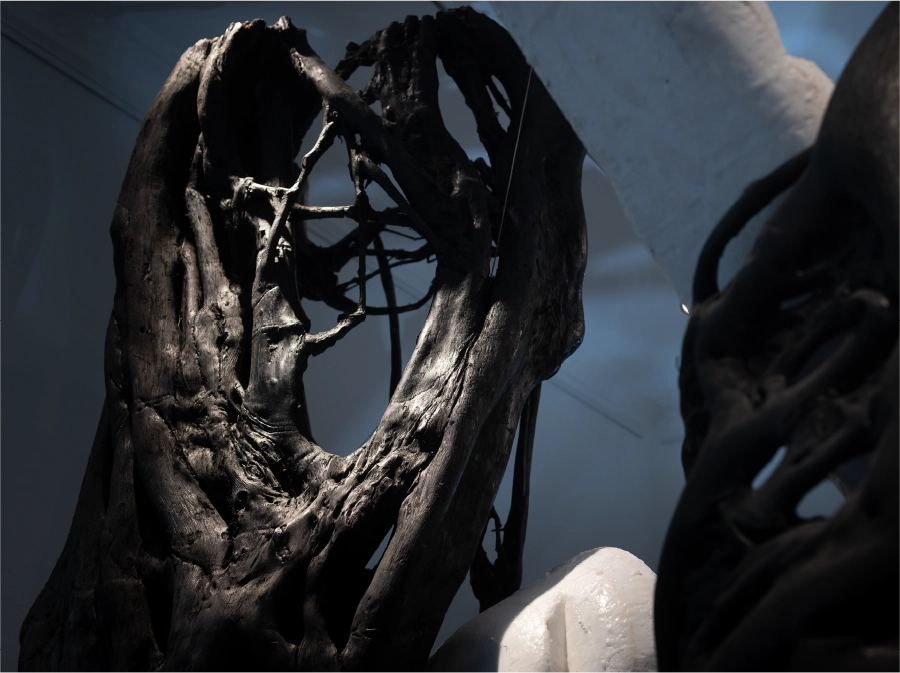
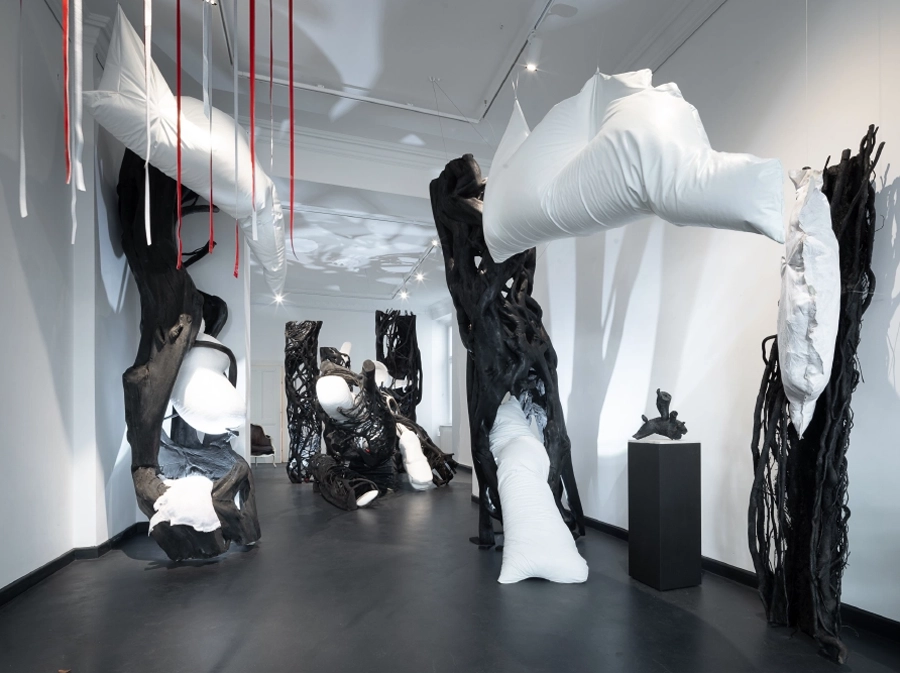
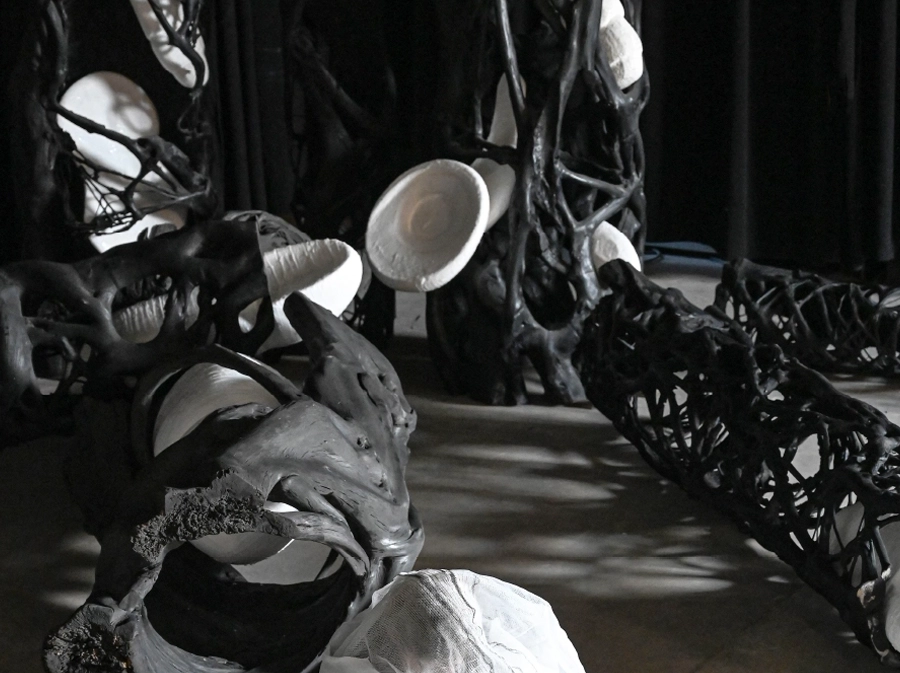
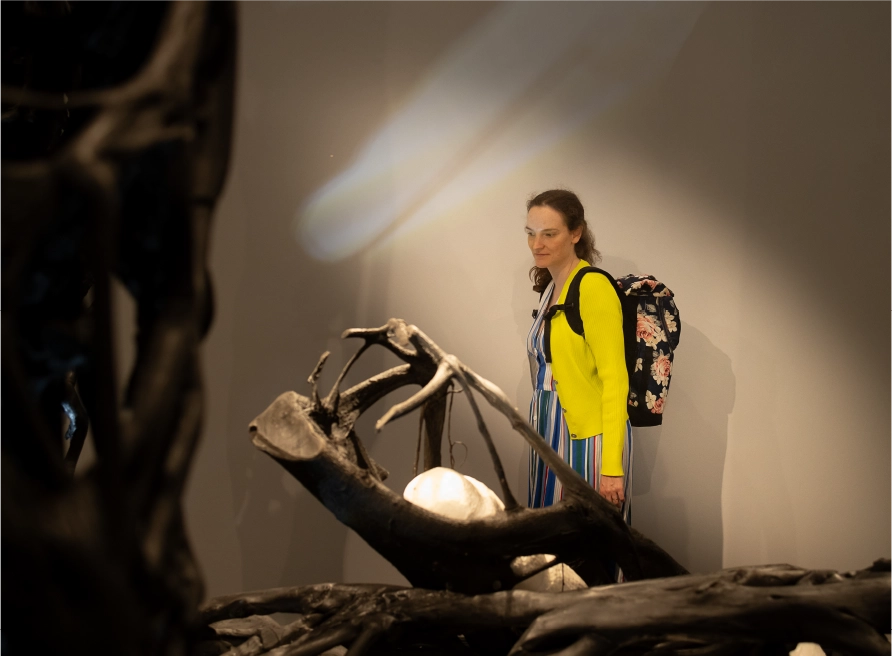
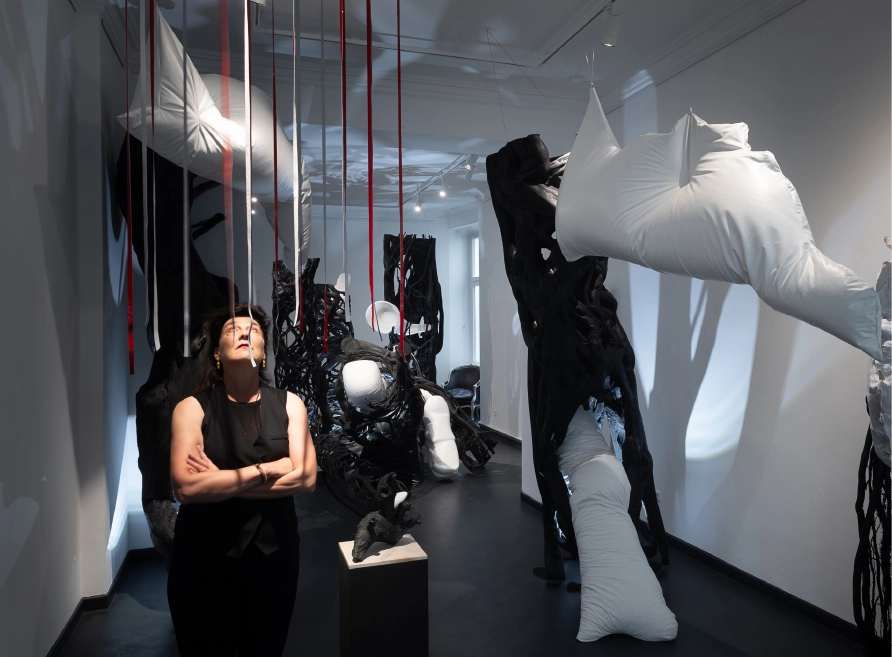
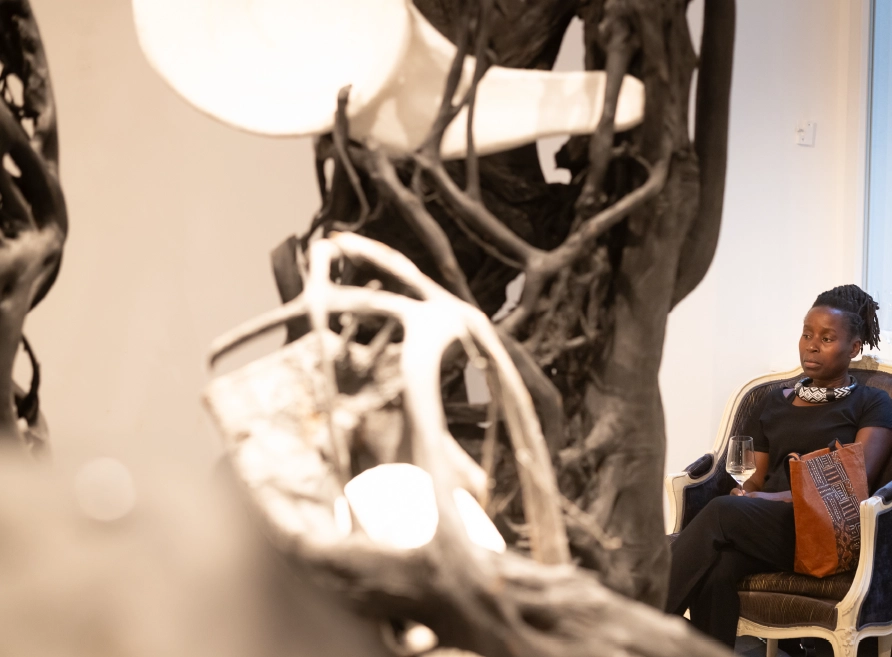
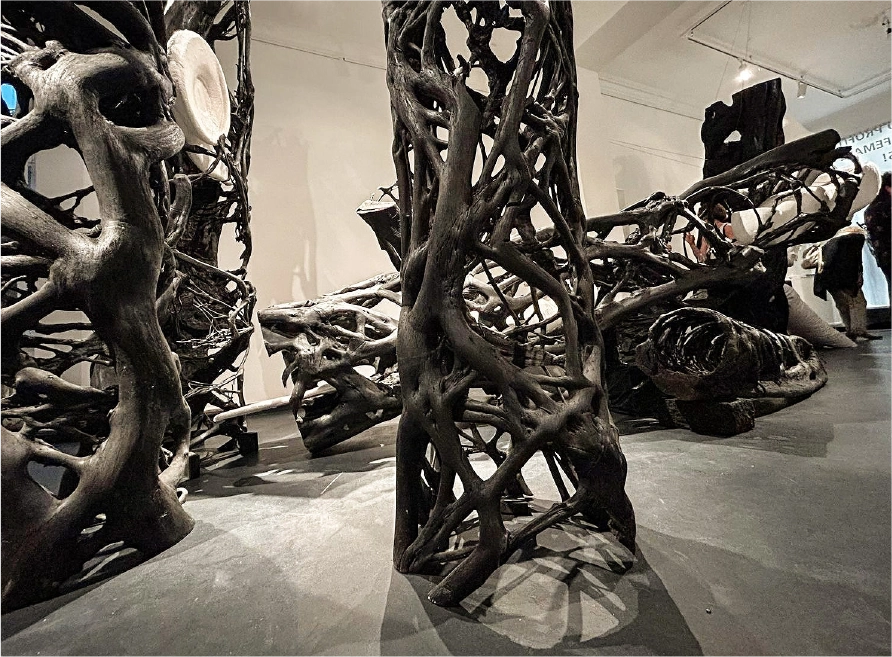
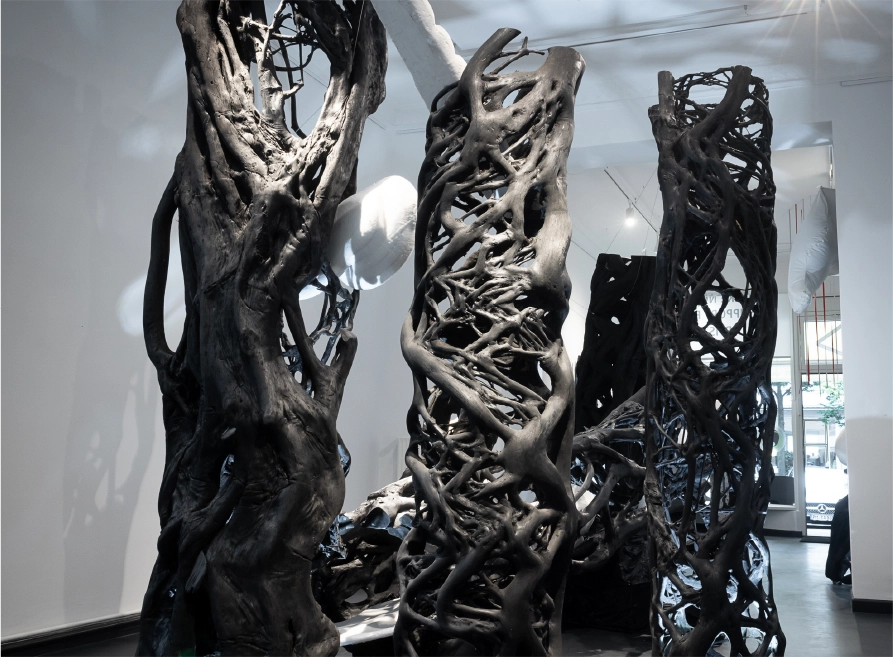
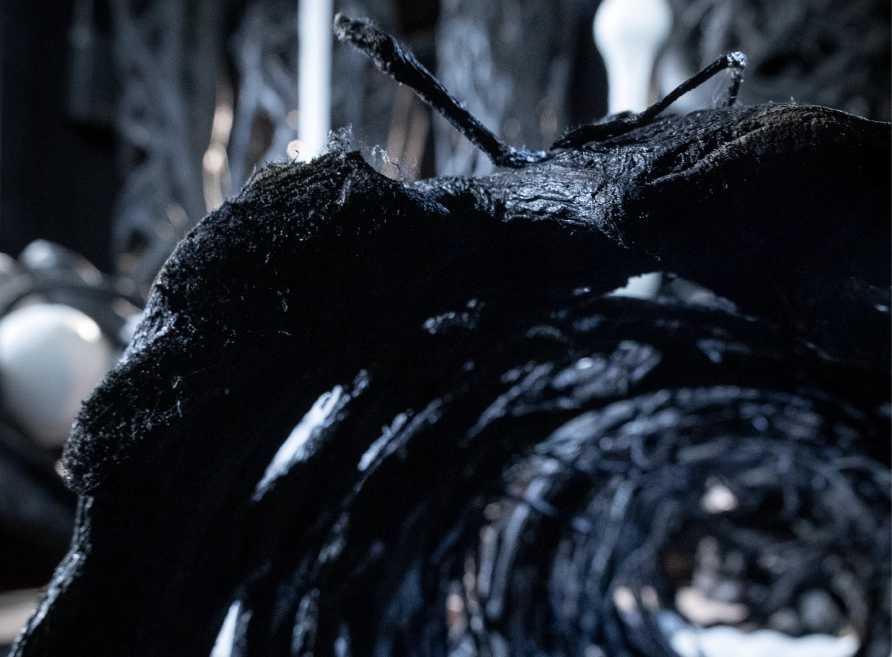
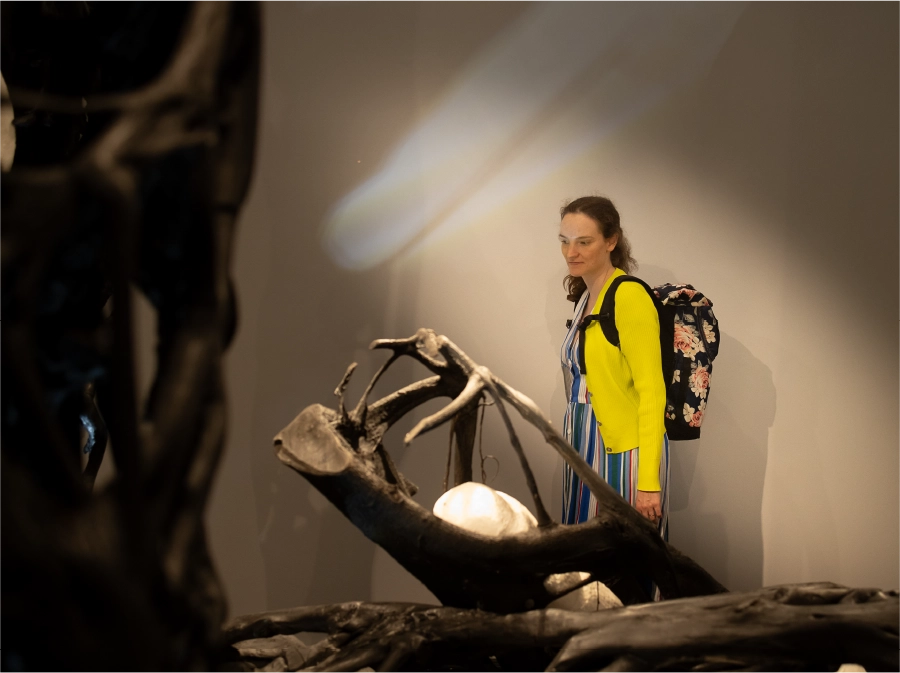
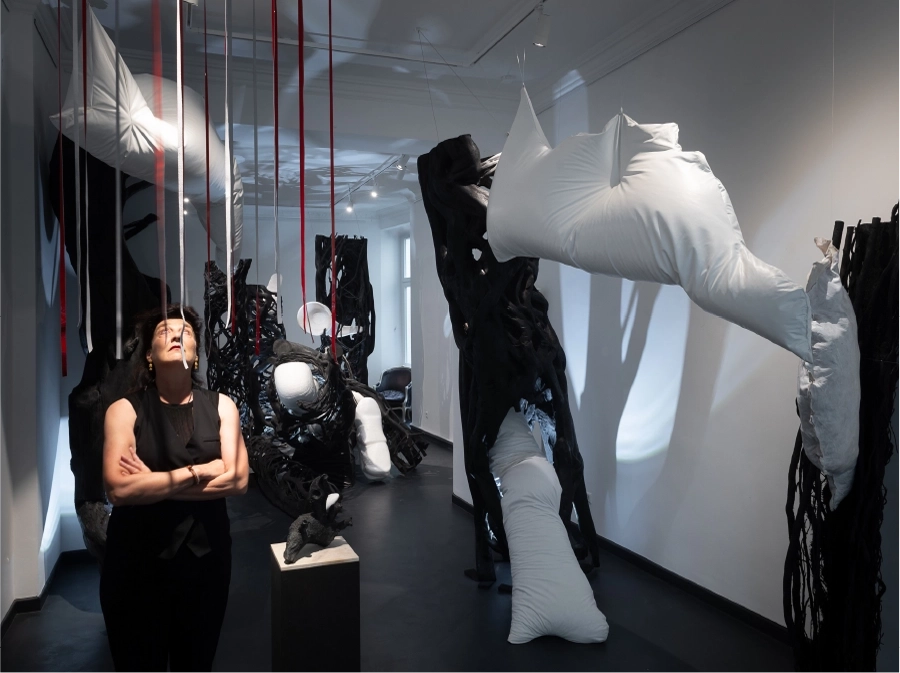
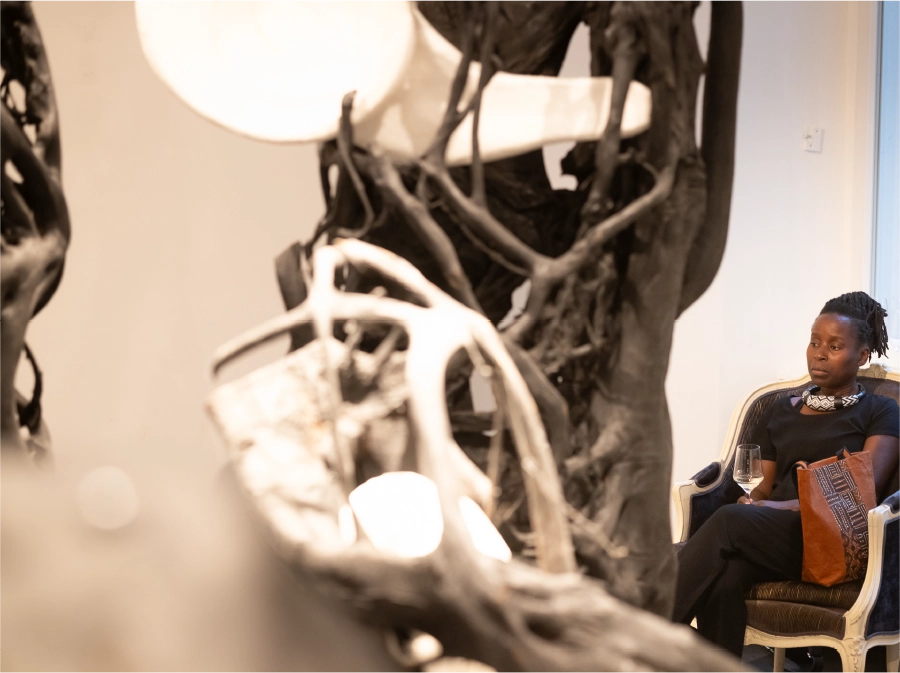
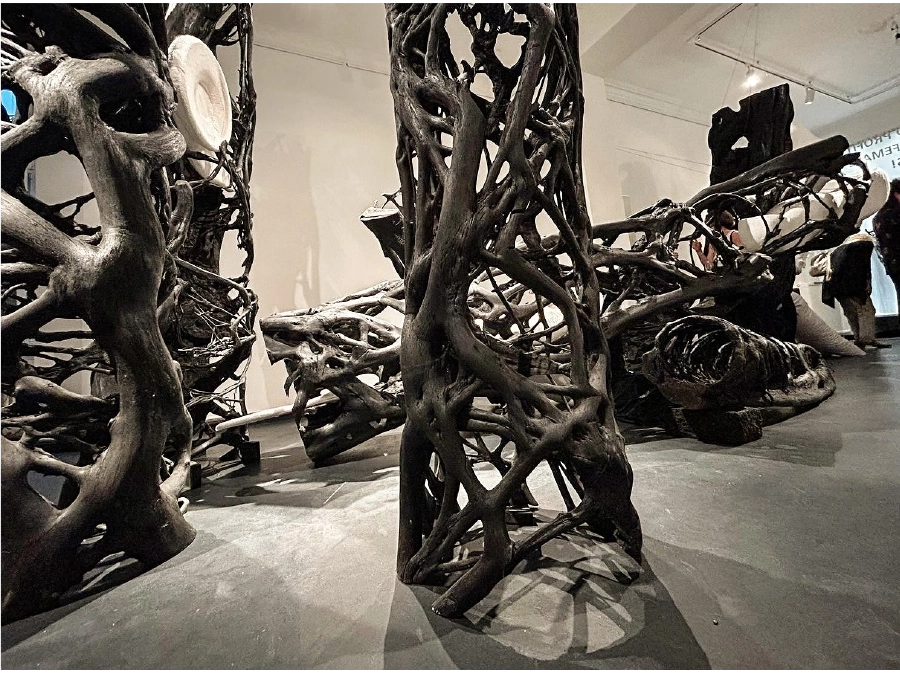
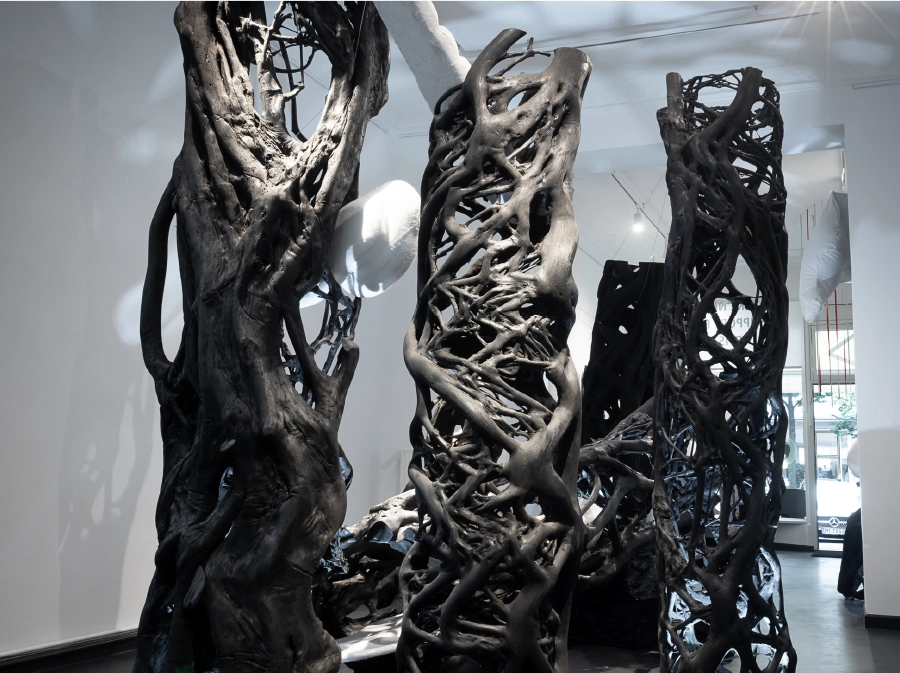
Dieser Kreislauf ist allgegenwärtig, gewohnt und nicht beängstigend. Man könnte ihn auch harmonisch und ausgewogen nennen, im Sinn von Werden und Vergehen, schwarz und weiß, ying und yang. Reliktische Teile der Würgefeige in großer Dimension werden in verhältnismässig kleine weiße Räume gebracht, durch ihre schwarze Farbe der Natur entfremdet und mit seltsamen weißen Objekten konfrontiert, die aus den grafisch interessanten Netzstrukturen herausschauen. Die Innenräume der Relikte sind gerade, sie enthüllen uns die Form des vergangenen Baumes, seines kontinuierlichen, aufstrebenden Wachstums. Als Leerstelle beeindruckend – kann man hineinsteigen, sich hindurchbewegen? Erst durch diese Kombination entsteht ein suggeriertes Pulsieren ja vermeintliches Wachstum. Große weiße Lederbälger heraus- oder hineinkriechend. Hier ist die Struktur knautschig veränderbar und die Größe der weißen Objekte fast gleichgewichtig zu den Schwarzen. Stehen sie in einer Polaritätsbeziehung? Ist das Ganze noch harmonisch oder überbordend, fremd und eklig? Nimmt eine Seite die Oberhand ein, wohin führt es? Ist der Kreislauf gestört? An einer Stelle treten rote Lacklederbänder ringartig in unterschiedlicher Länge aus der Zimmerdecke. Könnte hier an der einzig farbigen Stelle der Installation ein neuer Akt des Werdens beginnen? Ich entfremde natürliche Dinge ihrem Kontext und ihrer Dimension, kombiniere sie zu nie gesehenen Installationen und stelle damit Fragen nach Zugehörigkeit, Gewohnheit, Empfindung, Gewalt, Fremdheit und Ekel.
Material: Würgefeigen, Styropor, Wax, Leder, diverse Füllmaterialien.
2024 – Franziska Seifert
This cycle is omnipresent, familiar, and not frightening. One might even call it harmonious and balanced in the sense of „becoming and passing away“ — black and white, yin and yang. Vast, relict portions of the strangler fig are brought into relatively small white rooms; alienated from nature by their black colour, they are confronted with strange white objects that peek out from the graphically intriguing mesh structures. The interiors of these relics are straight; they reveal to us the form of the departed tree and its continuous, upward growth. Impressive as a void — can one step inside, or move through it? It is only through this combination that a suggested pulsation, an illusory growth, arises. Large, white leather bellows crawl out or in. Here, the structure is crumpled and malleable, and the size of the white objects carries almost equal weight to the black ones. Do they exist in a relationship of polarity? Is the whole still harmonious, or is it exorbitant, alien, and visceral? Does one side gain the upper hand? Where does it lead? Is the cycle disturbed? At one point, red patent-leather bands emerge from the ceiling like rings of varying lengths. Could a new act of „becoming“ begin here, at the only coloured point of the installation? I alienate natural objects from their context and dimension, combining them into never-before-seen installations to raise questions About belonging, habit, perception, violence, strangeness, and disgust.
Materials: Strangler figs, polystyrene, wax, leather, various filling materials.
2024 – Franziska Seifert